Pleural Effusion Color Chart
Pleural Effusion Color Chart - A pleural effusion, ie, an excessive accumulation of fluid in the pleural space, indicates an imbalance between pleural fluid formation and removal. Web for patients presenting with clinical signs of a pleural effusion, the primary diagnostic tools include roentgenographic studies of the chest and a thoracentesis. Bpe is an extremely rare type of pleural effusion, associated with infection, malignancy, and hemolysis of massive intrapleural bleeding [ 3, 4 ]. Congestive cardiac failure or malignancy). Accumulation of pleural fluid is not a specific disease,. Web this color in pleural fluid is a classic representation of a transudative effusion resulting from congestive heart failure. Initial information about the pleural effusion comes from the color and appearance of the fluid obtained during thoracentesis. The diagnosis of mpe is discussed separately. 863 iu/dl) were statistically higher in bloody pleural effusions. If there’s excess fluid in this area, it can cause symptoms such as shortness of breath and coughing. Congestive cardiac failure or malignancy). Web normally, this area contains about 20 milliliters of clear or yellow fluid. Web interpreting pleural fluid results correctly requires an awareness of the possible aetiologies of a pleural effusion and an understanding of the reliability of the outcome of each investigation. Pleural effusions are usually seen only when the serum albumin is <2 g/dl. When unspecified, the term pleural effusion normally refers to hydrothorax. Web colour of pleural effusion fluid if you have pneumonia?: Web various kinds of fluid can accumulate in the pleural space, such as serous fluid ( hydrothorax ), blood ( hemothorax ), pus ( pyothorax, more commonly known as pleural empyema ), chyle ( chylothorax ), or very rarely urine ( urinothorax) or feces ( coprothorax ). Web pleural effusion, also called water on the lung, happens when fluid builds up between your lungs and chest cavity. Web the treatment of pleural effusions is usually targeted to the underlying condition (e.g. Pleural tissue invasion by malignant cells may be seen on pleural biopsy and may result in positive fluid cytology. If the fluid is exudative, further pleural diagnostic tests should be considered, such as white blood count (wbc) with. Web pleural effusion, which some people call “water on the lungs,” is the buildup of excess fluid between the layers of the pleura outside your lungs. Web definition (malignant/paramalignant) in mpes, infiltration of cancer cells into pleural tissue is observed; Under. Chylous effusion also occurs with the superior vena cava syndrome. Congestive cardiac failure or malignancy). If the fluid is exudative, further pleural diagnostic tests should be considered, such as white blood count (wbc) with. The diagnosis of mpe is discussed separately. Bj’s brewhouse blonde®, a kölsch style pale beer, is comparable in color to a coors. Web pleural effusion, also called water on the lung, happens when fluid builds up between your lungs and chest cavity. Web for patients presenting with clinical signs of a pleural effusion, the primary diagnostic tools include roentgenographic studies of the chest and a thoracentesis. The diagnosis of mpe is discussed separately. Pleural effusions are usually seen only when the serum. Web a pleural effusion is an abnormal fluid accumulation within the pleural space. If the fluid is exudative, further pleural diagnostic tests should be considered, such as white blood count (wbc) with. Bpe is an extremely rare type of pleural effusion, associated with infection, malignancy, and hemolysis of massive intrapleural bleeding [ 3, 4 ]. Web in addition to its. (murray 2022) effusions are related to sodium retention and hypervolemia. When unspecified, the term pleural effusion normally refers to hydrothorax. Accumulation of pleural fluid is not a specific disease,. Web definition (malignant/paramalignant) in mpes, infiltration of cancer cells into pleural tissue is observed; Web the fluid color sign is a diagnostic sign to differentiate a pleural effusion from pleural thickening. Web various kinds of fluid can accumulate in the pleural space, such as serous fluid ( hydrothorax ), blood ( hemothorax ), pus ( pyothorax, more commonly known as pleural empyema ), chyle ( chylothorax ), or very rarely urine ( urinothorax) or feces ( coprothorax ). Web for patients presenting with clinical signs of a pleural effusion, the primary. Web colour of pleural effusion fluid if you have pneumonia?: Web for patients presenting with clinical signs of a pleural effusion, the primary diagnostic tools include roentgenographic studies of the chest and a thoracentesis. Web pleural effusion, which some people call “water on the lungs,” is the buildup of excess fluid between the layers of the pleura outside your lungs.. The diagnosis of mpe is discussed separately. Accumulation of pleural fluid is not a specific disease,. Learn why this happens and how to recognize it. 863 iu/dl) were statistically higher in bloody pleural effusions. The color of beer, like pleural fluid, depends on beer one: Web the treatment of pleural effusions is usually targeted to the underlying condition (e.g. Web common descriptors were used to create three colour charts to describe pleural fluid. If there’s excess fluid in this area, it can cause symptoms such as shortness of breath and coughing. Initial information about the pleural effusion comes from the color and appearance of the. Web for patients presenting with clinical signs of a pleural effusion, the primary diagnostic tools include roentgenographic studies of the chest and a thoracentesis. The presence or absence of blood in pleural effusions cannot predict their etiology in patients with cancer and recurrent symptomatic pleural effusions. Bpe is an extremely rare type of pleural effusion, associated with infection, malignancy, and. Web chest radiography is helpful in determining laterality and detecting moderate to large pleural effusions, whereas ultrasonography can detect small effusions and features that could indicate. Web the treatment of pleural effusions is usually targeted to the underlying condition (e.g. Web definition (malignant/paramalignant) in mpes, infiltration of cancer cells into pleural tissue is observed; Web for patients presenting with clinical signs of a pleural effusion, the primary diagnostic tools include roentgenographic studies of the chest and a thoracentesis. Colour frankly purulent fluid indicates an empyema (an anaerobic empyema is likely if the fluid has a putrid odour). Bpe is an extremely rare type of pleural effusion, associated with infection, malignancy, and hemolysis of massive intrapleural bleeding [ 3, 4 ]. Symptomatic patients with large effusions may be treated by therapeutic aspiration (thoracentesis). Web the number of red blood cells (220.5 × 10 3 /μl vs. (fishman 2023) effusions are usually bilateral, often subdiaphragmatic in location. Chylous effusion also occurs with the superior vena cava syndrome. Web colour of pleural effusion fluid if you have pneumonia?: Web pleural effusion, which some people call “water on the lungs,” is the buildup of excess fluid between the layers of the pleura outside your lungs. Accumulation of pleural fluid is not a specific disease,. If there’s excess fluid in this area, it can cause symptoms such as shortness of breath and coughing. In the case of pleural effusion a color signal is seen in the pleural fluid during respiratory and cardiac movement, whereas this color signal is not seen in the case of pleural thickening. Congestive cardiac failure or malignancy).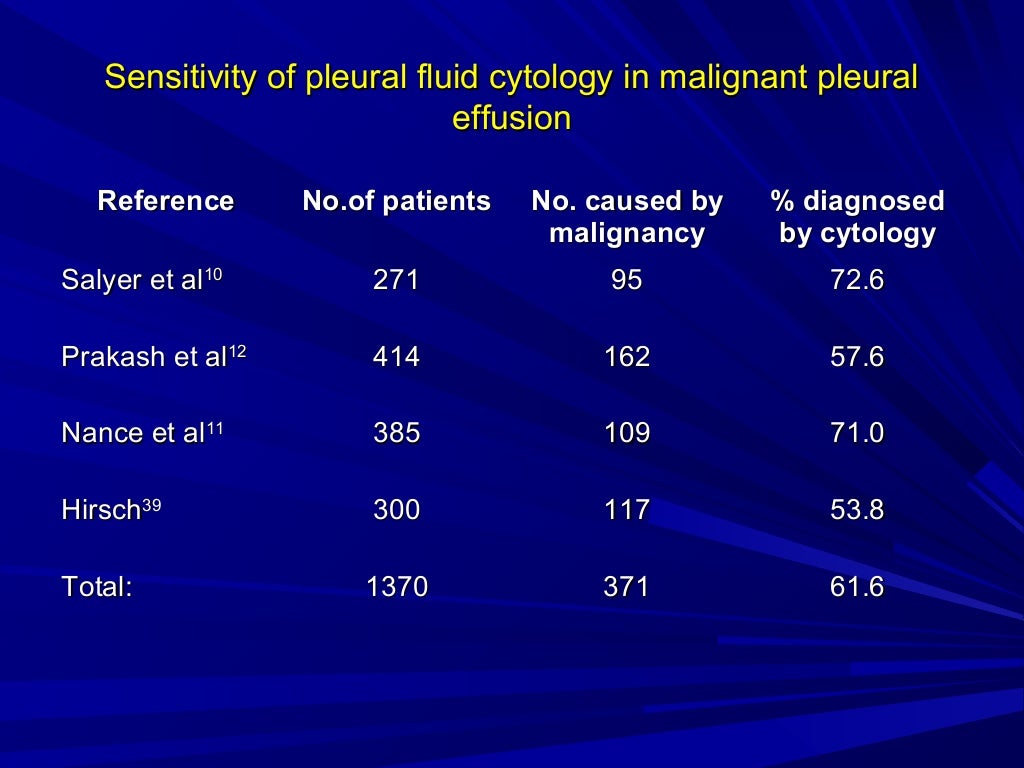
Pleural Effusion Color Chart
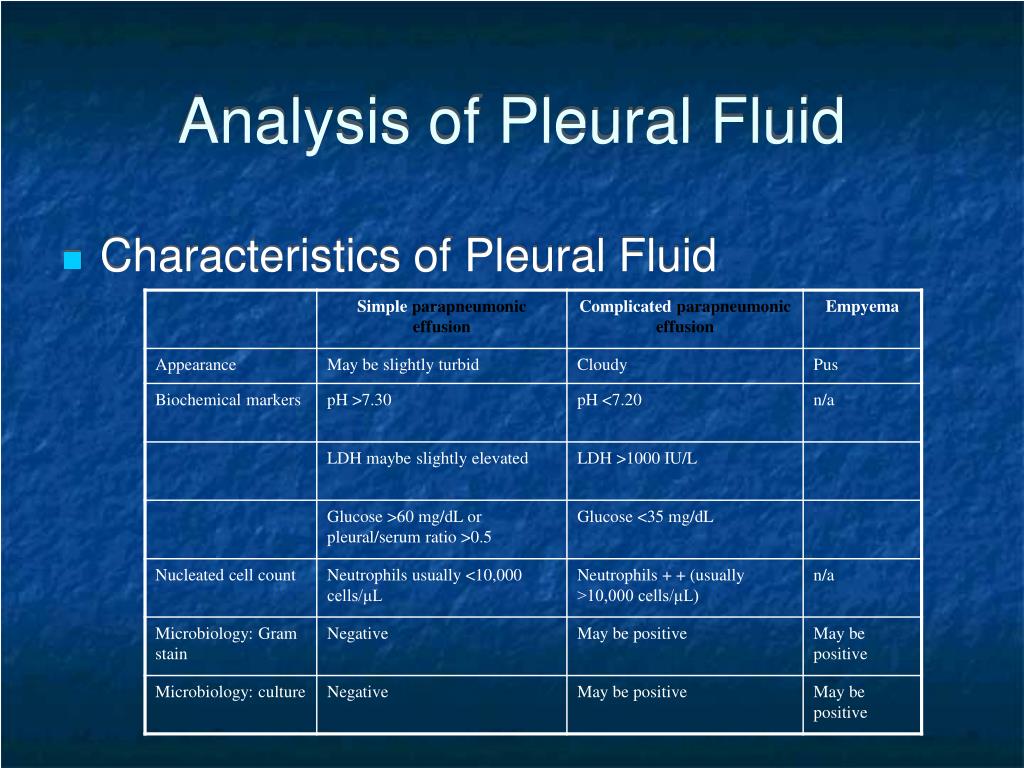
Chart Pleural Effusion Fluid Color
Light's criteria for assessing Pleural Effusion MEDizzy

Color Of Pleural Effusion

Pleural Fluid Color Chart

Pleural Effusion Color Chart

Color Of Pleural Effusion
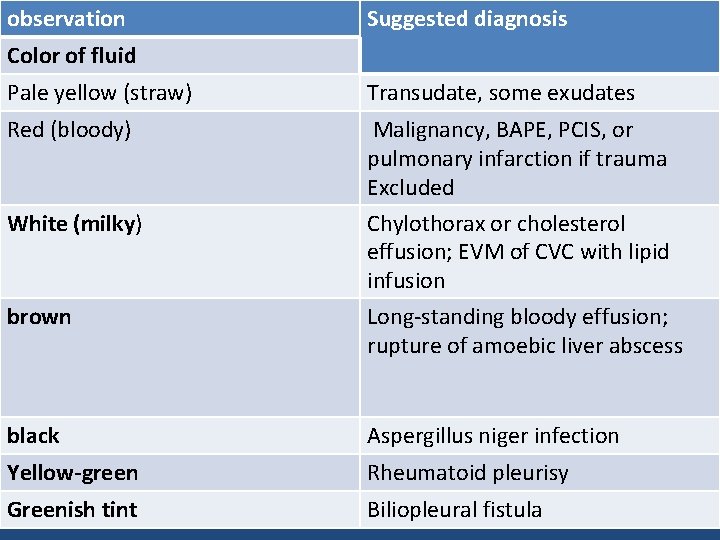
Pleural procedures Dr anan esmail parietal pleura supplied

Pleural Fluid Color Chart

Chart Pleural Effusion Fluid Color
Web This Color In Pleural Fluid Is A Classic Representation Of A Transudative Effusion Resulting From Congestive Heart Failure.
Criteria For Identifying Exudative Pleural Effusions.
The Diagnosis Of Mpe Is Discussed Separately.
Under Normal Circumstances, A Small Amount Of Fluid Is Continuously Produced And Reabsorbed Within This Space To Maintain Lubrication And Facilitate Smooth Movement Of The Lungs During Respiration.
Related Post: