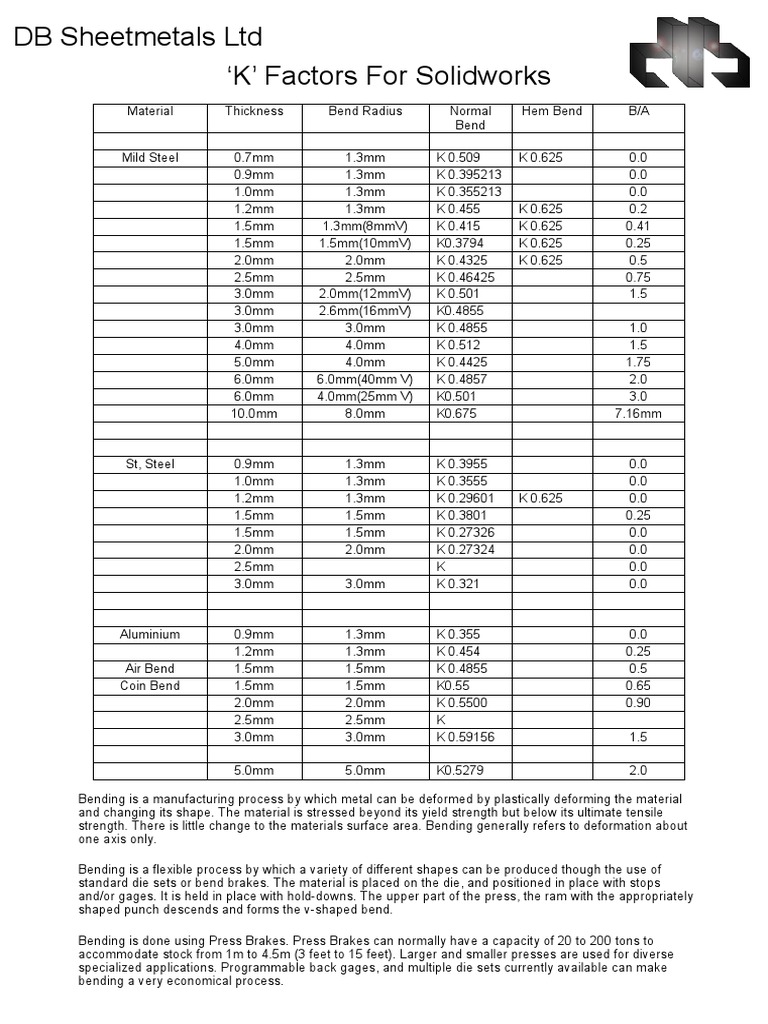
K Factor Chart
K Factor Chart - The calculator returns the answer as a decimal. Web solidworks sheet metal tools are relatively straight forward, but may not be clearly understood. By understanding these principles, you can improve the precision and efficiency of your sheet metal projects. It varies according to material, its thickness, bend radius and bending method. Web online bend deduction calculator. Web how to calculate bend allowance, k factor and y coefficient in one click. The chart will be posted soon… It ultimately allows you to estimate the amount of stretch without knowing what type of material you are bending. It is also used independently to calculate the bend allowance (ba) under various conditions, such as: Metric calculations use the flow in liters per minute and pressure in bar. Web online bend deduction calculator. It’s calculated in imperial units for the united states by using the flow in gallons per minute (gpm) and the pressure in psi. Learn about them to avoid issues during your design process. Choose units and enter the following: Metric calculations use the flow in liters per minute and pressure in bar. It varies according to material, its thickness, bend radius and bending method. To calculate the bend allowance, the k factor and the derived coefficient called the y factor, insert the thickness and initial length of the sheet into the cells on the left. In fact, it varies according to the type of material to be deformed. Basically, the k factor offsets the neutral line to provide a flat pattern that reflects reality. Web mathematically k factor value is equal to the ratio of position of the neutral axis and sheet thickness. Basically, the k factor offsets the neutral line to provide a flat pattern that reflects reality. It is important to predict the bending allowance, which is the amount of material needed to achieve a desired bend. Also, find our k factor calculator for the bend radius formula here. Web k factor is an empirical constant, meaning that its value was. Basically, the k factor offsets the neutral line to provide a flat pattern that reflects reality. Generally, a normal range of 0 to.5 is seen in the case of standard material and thicknesses. It is important to predict the bending allowance, which is the amount of material needed to achieve a desired bend. The calculator returns the answer as a. Learn about them to avoid issues during your design process. By understanding these principles, you can improve the precision and efficiency of your sheet metal projects. Generally, a normal range of 0 to.5 is seen in the case of standard material and thicknesses. It is also used independently to calculate the bend allowance (ba) under various conditions, such as: In. Generally, a normal range of 0 to.5 is seen in the case of standard material and thicknesses. The calculator returns the answer as a decimal. Learn about them to avoid issues during your design process. By understanding these principles, you can improve the precision and efficiency of your sheet metal projects. It is also used independently to calculate the bend. Also, find our k factor calculator for the bend radius formula here. Generally, a normal range of 0 to.5 is seen in the case of standard material and thicknesses. Web the experts at fma provide q deep dive into the k factor, what it is, and why it matters. It is important to predict the bending allowance, which is the. Basically, the k factor offsets the neutral line to provide a flat pattern that reflects reality. You can also use our flat pattern calculator for blank size calculation. Web the experts at fma provide q deep dive into the k factor, what it is, and why it matters. Web how to calculate bend allowance, k factor and y coefficient in. It’s calculated in imperial units for the united states by using the flow in gallons per minute (gpm) and the pressure in psi. By understanding these principles, you can improve the precision and efficiency of your sheet metal projects. To calculate the bend allowance, the k factor and the derived coefficient called the y factor, insert the thickness and initial. It ultimately allows you to estimate the amount of stretch without knowing what type of material you are bending. Web k factor is an empirical constant, meaning that its value was determined by testing. Web how to calculate bend allowance, k factor and y coefficient in one click. It varies according to material, its thickness, bend radius and bending method.. Web solidworks sheet metal tools are relatively straight forward, but may not be clearly understood. To calculate the bend allowance, the k factor and the derived coefficient called the y factor, insert the thickness and initial length of the sheet into the cells on the left. It is important to predict the bending allowance, which is the amount of material. It’s calculated in imperial units for the united states by using the flow in gallons per minute (gpm) and the pressure in psi. To calculate the bend allowance, the k factor and the derived coefficient called the y factor, insert the thickness and initial length of the sheet into the cells on the left. Read the bend allowance and deduction. Choose units and enter the following: Read the bend allowance and deduction from the last two fields. To calculate the bend allowance, the k factor and the derived coefficient called the y factor, insert the thickness and initial length of the sheet into the cells on the left. It is also used independently to calculate the bend allowance (ba) under various conditions, such as: Metric calculations use the flow in liters per minute and pressure in bar. In fact, it varies according to the type of material to be deformed. Web mathematically k factor value is equal to the ratio of position of the neutral axis and sheet thickness. By understanding these principles, you can improve the precision and efficiency of your sheet metal projects. Web the k factor calculator uses the thickness of the material, bend angle, inside radius, and bend allowance to find the k factor. The calculator returns the answer as a decimal. Also, find our k factor calculator for the bend radius formula here. It varies according to material, its thickness, bend radius and bending method. The chart will be posted soon… It ultimately allows you to estimate the amount of stretch without knowing what type of material you are bending. It is important to predict the bending allowance, which is the amount of material needed to achieve a desired bend. Web online bend deduction calculator.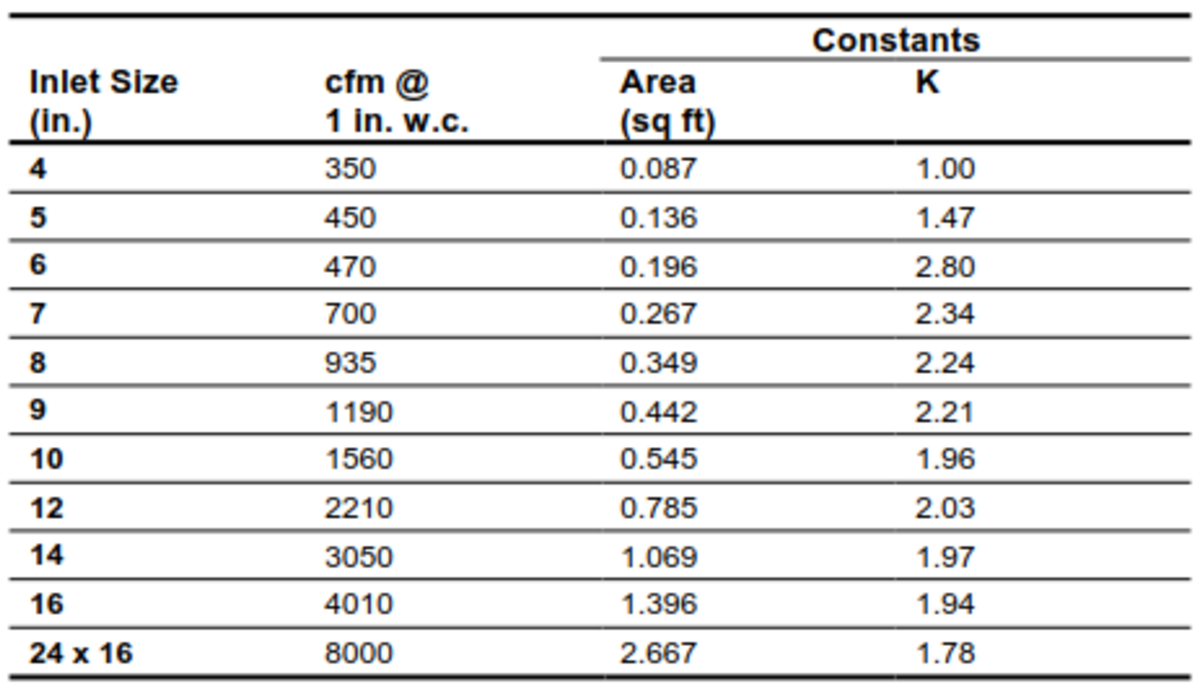
What is the K factor and how do we use it in HVAC applications? Hvac

What is KFactor? Reference Chart from AGF Manufacturing

K Factor Table Statistics Elcho Table

K Factor Quick Reference Thermo Scientific Home Page

What Is K Factor Reference Chart From Agf Manufacturi vrogue.co

Kfactor & Transformers Power Quality Blog
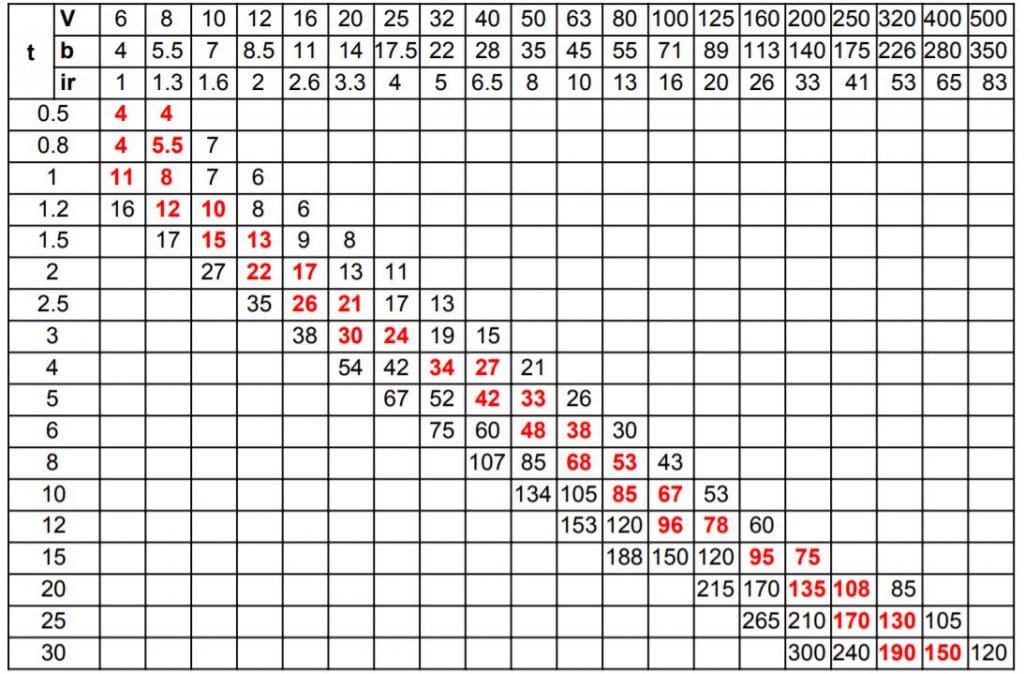
Sheet Metal Bending Design Tips, Bend Allowance, K Factor Fractory

Soil erodibility (K) factor values Download Table
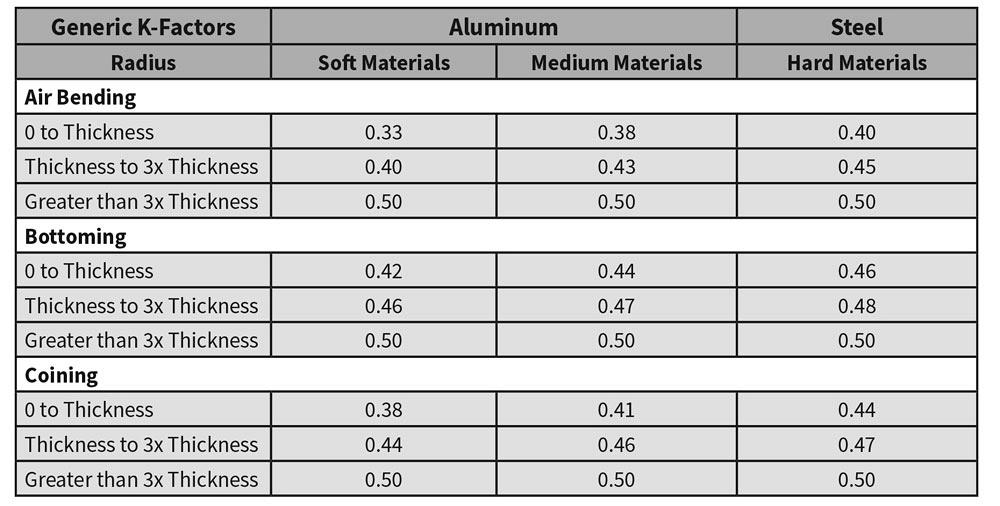
Analyzing the kfactor in sheet metal bending Part II
K Factors + Bending Info Sheet Metal Industries
Basically, The K Factor Offsets The Neutral Line To Provide A Flat Pattern That Reflects Reality.
Generally, A Normal Range Of 0 To.5 Is Seen In The Case Of Standard Material And Thicknesses.
It’s Calculated In Imperial Units For The United States By Using The Flow In Gallons Per Minute (Gpm) And The Pressure In Psi.
Web K Factor Is An Empirical Constant, Meaning That Its Value Was Determined By Testing.
Related Post: